Categories
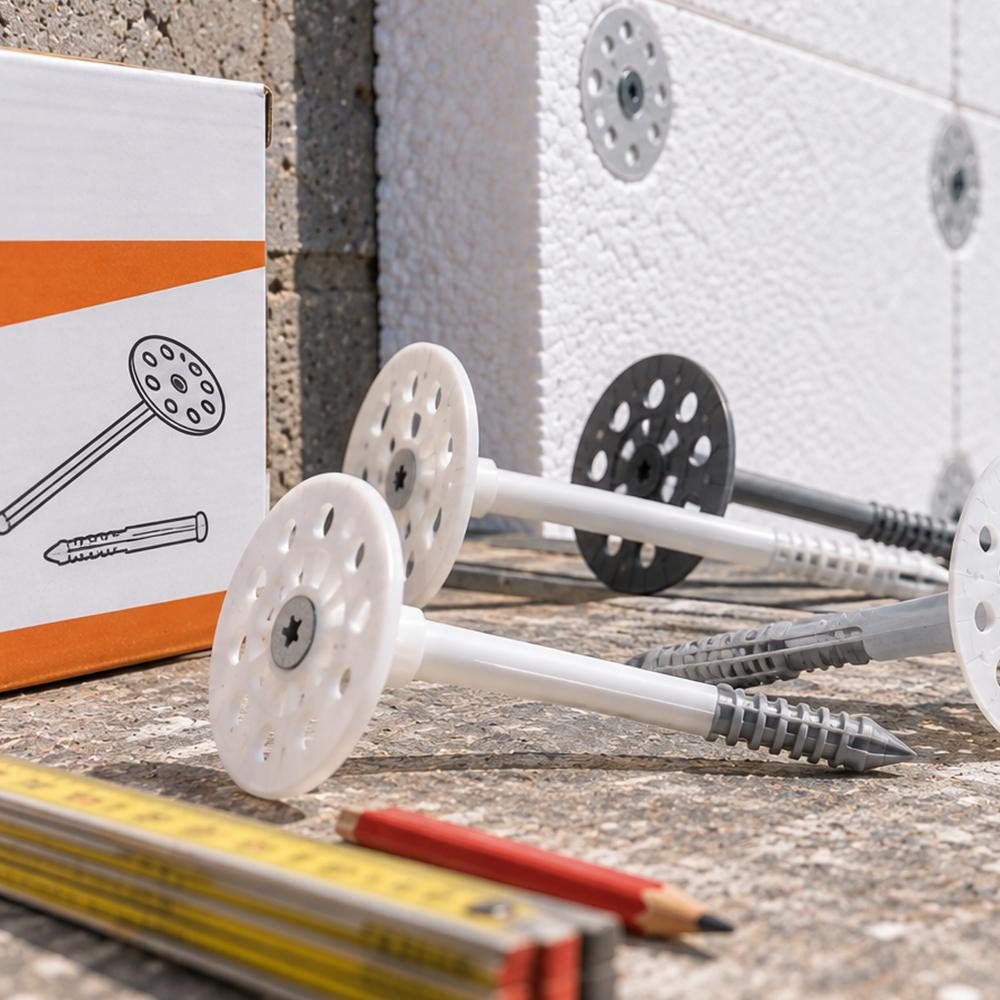
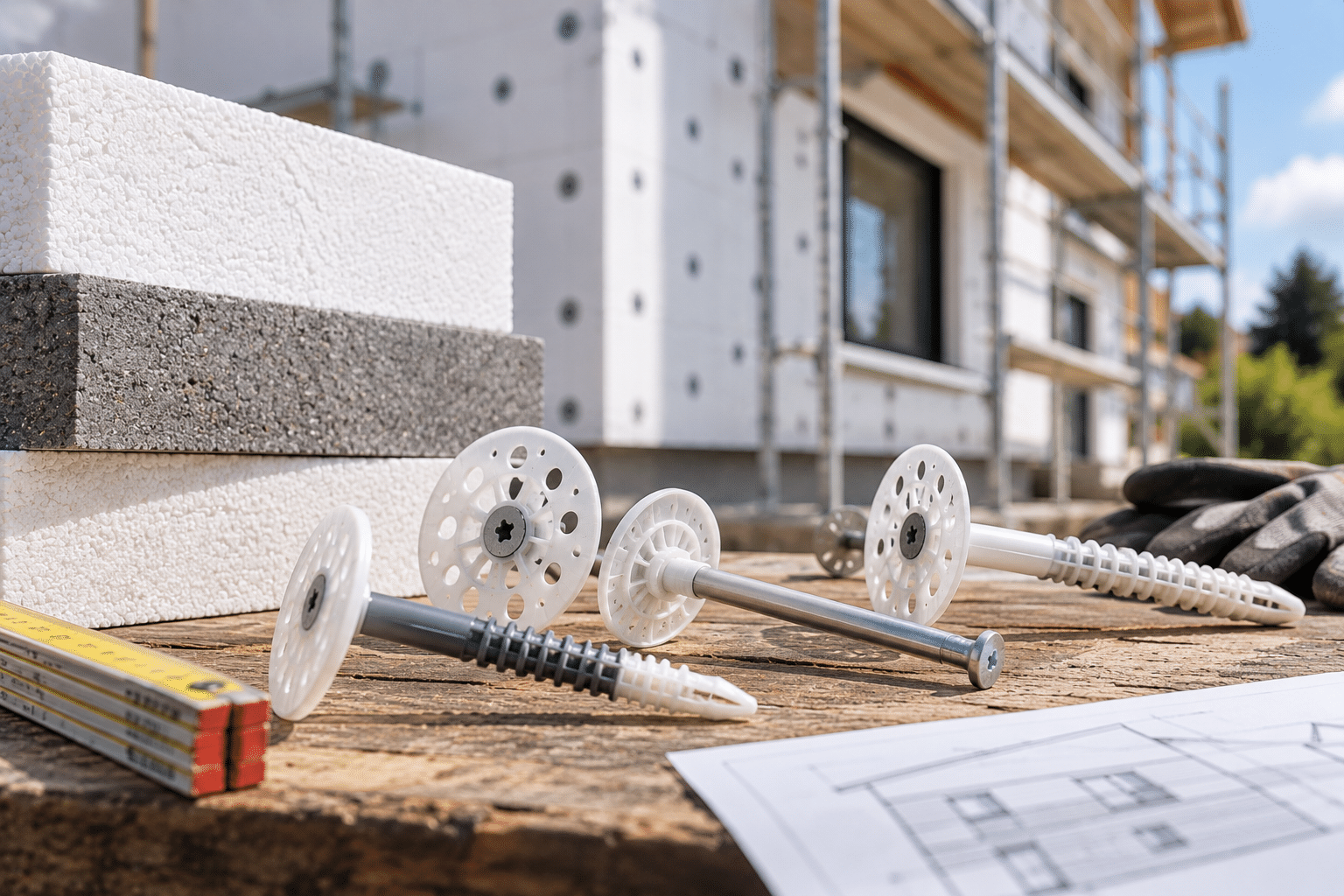
Hammer-in anchors, helical anchors and rosettes: these mechanical fixings securely anchor the insulation to the wall and absorb wind loads on the façade. Centrale ITE offers external wall insulation (EWI) anchors with European Technical Approval, ranging from 95 to 300 mm, for concrete, brick, aerated concrete blocks and timber frames, at trade prices for both private individuals and professionals.
Categories
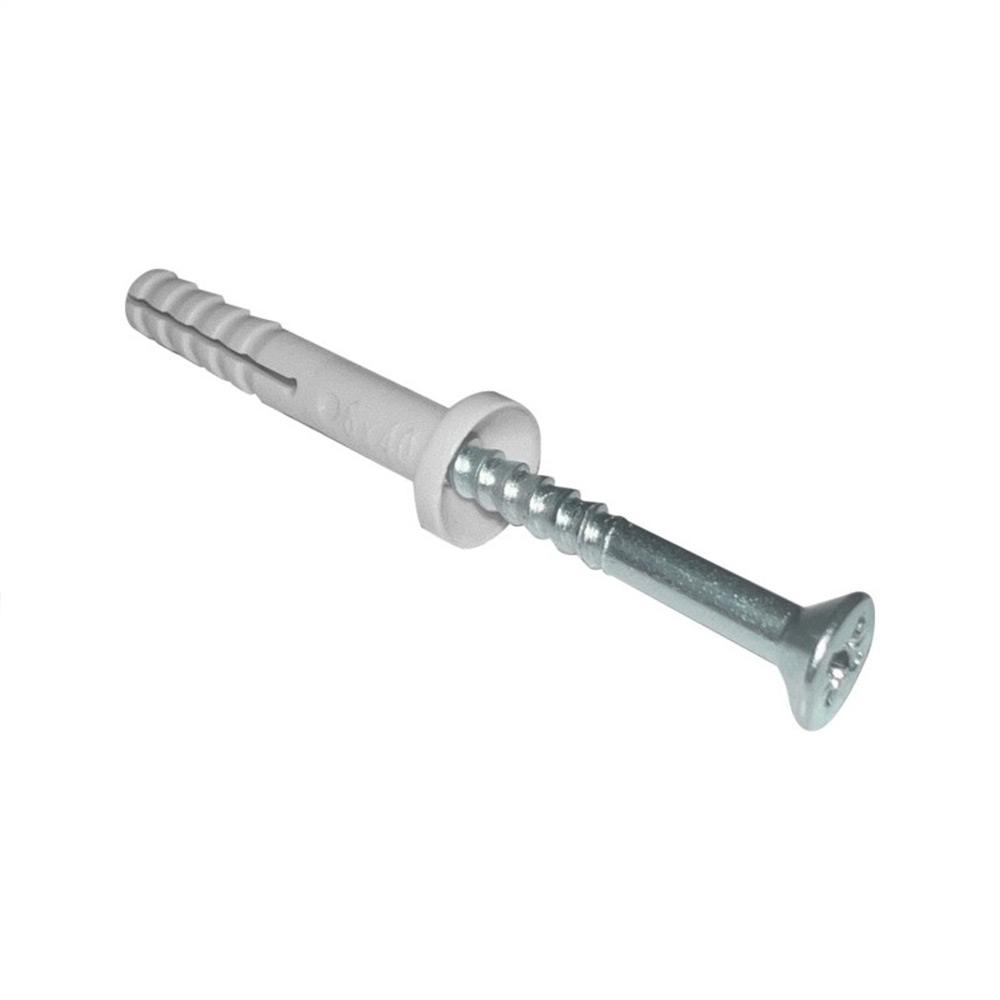
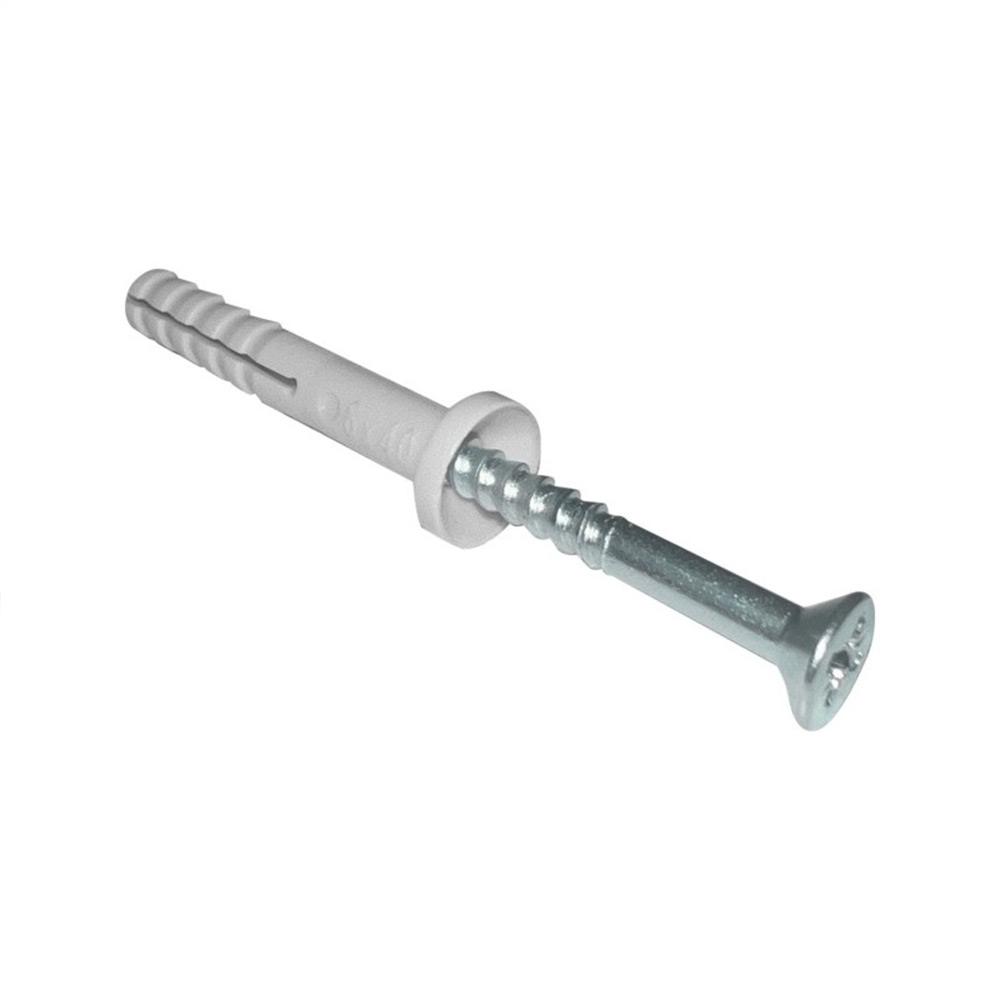
The 6×40 mm hammer-in anchor is a quick-fix fastener comprising a nylon body and a steel screw, designed for fixing starter profiles, rails and flashings in external thermal insulation systems. It is supplied in boxes of 50.
Its reinforced flat flange ensures the screw head sits firmly against the profile, providing a quick and reliable fix to most building materials.
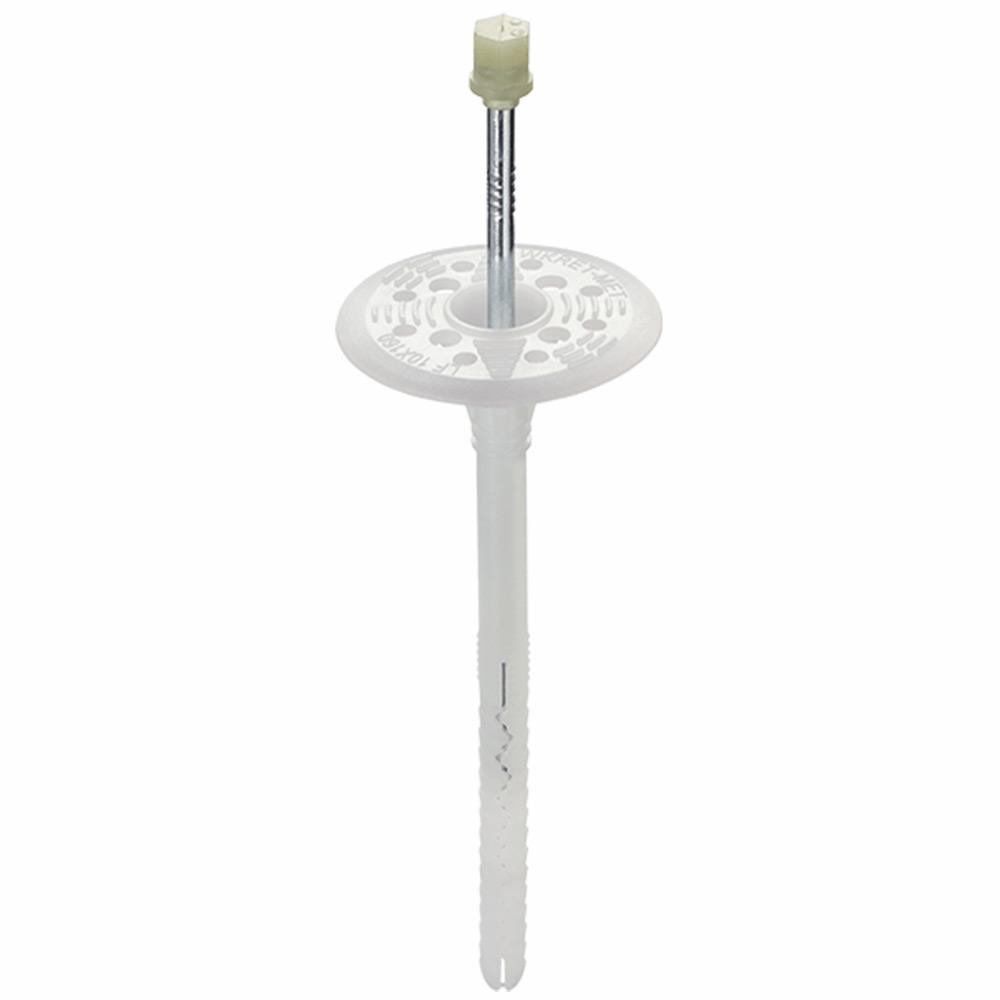
The LFM 10 anchor, 140 mm in length, is a mechanical hammer-in fastener, comprising a polyethylene body and a galvanised steel nail, designed for the supplementary fixing of insulation boards in external wall insulation systems. It is certified under European Technical Assessment ETA-17/0450.
Packaged in boxes of 200 pieces by the manufacturer Klimas France, it is suitable for insulation thicknesses of up to approximately 60 mm on new substrates, and helps to counteract wind suction forces on the insulated façade.
The LFM 10 anchor, 160 mm long, is a mechanical hammer-in fastener, comprising a polyethylene body and a galvanised steel nail, designed for the supplementary fixing of insulation boards in external wall insulation systems. It is certified under European Technical Assessment ETA-17/0450.
Packaged in boxes of 200 pieces by the manufacturer Klimas France, it is suitable for insulation thicknesses of up to approximately 80 mm on new substrates, and helps to counteract wind suction forces on the insulated façade.
The LFM 10 anchor, 180 mm in length, is a mechanical hammer-in fastener, comprising a polyethylene body and a galvanised steel nail, designed for the supplementary fixing of insulation boards in external wall insulation systems. It is certified under European Technical Assessment ETA-17/0450.
Packaged in boxes of 200 pieces by the manufacturer Klimas France, it is suitable for insulation thicknesses of up to approximately 100 mm on new substrates, and helps to counteract wind suction forces on the insulated façade.
The LFM 10 anchor, 200 mm in length, is a mechanical hammer-in fastener, comprising a polyethylene body and a galvanised steel nail, designed for the supplementary fixing of insulation boards in external wall insulation systems. It is certified under European Technical Assessment ETA-17/0450.
Packaged in cartons of 200 pieces by the manufacturer Klimas France, it is suitable for insulation thicknesses of up to approximately 120 mm on new substrates, and helps to counteract wind suction forces on the insulated façade.
The LFM 10 anchor, 220 mm in length, is a mechanical hammer-in fastener, comprising a polyethylene body and a galvanised steel nail, designed for the supplementary fixing of insulation boards in external wall insulation systems. It is certified under European Technical Assessment ETA-17/0450.
Packaged in boxes of 100 pieces by the manufacturer Klimas France, it is suitable for insulation thicknesses of up to approximately 140 mm on new substrates, and helps to counteract wind suction forces on the insulated façade.
The LFM 10 anchor, 260 mm in length, is a mechanical drive-in fastener, comprising a polyethylene body and a galvanised steel nail, designed for the supplementary fixing of insulation boards in external wall insulation systems. It is certified under European Technical Assessment ETA-17/0450.
Packaged in boxes of 100 pieces by the manufacturer Klimas France, it is suitable for insulation thicknesses of up to approximately 180 mm on new substrates, and helps to counteract wind suction forces on the insulated façade.
The LMX8 anchor, 95 mm in length, is an 8 mm diameter mechanical hammer-in fastener, fitted with a metal nail, designed for the supplementary fixing of thin insulation boards in external wall insulation (EWI) systems.
Packaged in cartons of 200 pieces, it offers a smaller-diameter alternative to the LFM 10 range, suitable for applications where minimal drilling into the substrate is required.
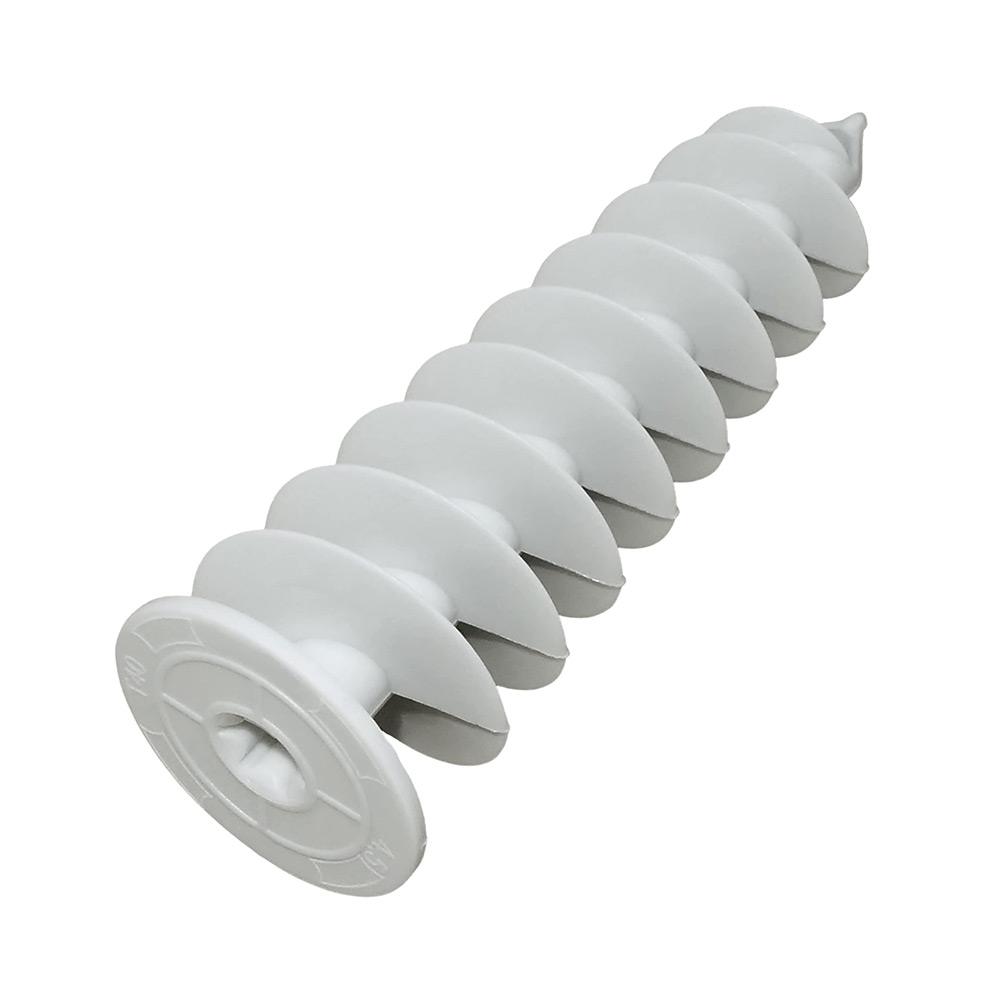
The SPIRAL helical anchor is a fixing designed to be screwed directly into the rigid insulation of external thermal insulation systems (ETIS), without the need for pre-drilling. Its 85 mm length allows it to secure lightweight items such as letterboxes, outdoor lighting or house numbers.
Its spiral design ensures a secure hold in the insulation whilst minimising the thermal bridge created by the fixing, providing a quick and cost-effective solution for low-load accessories on façades.
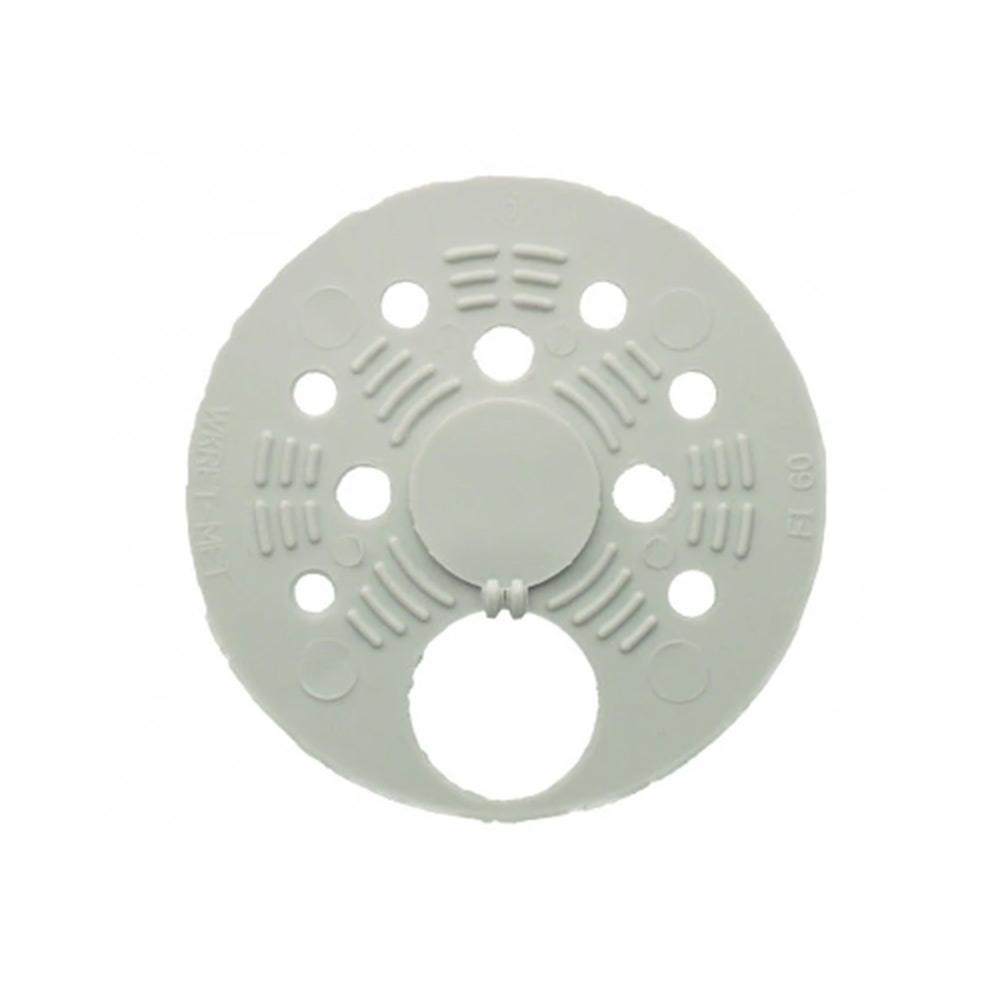
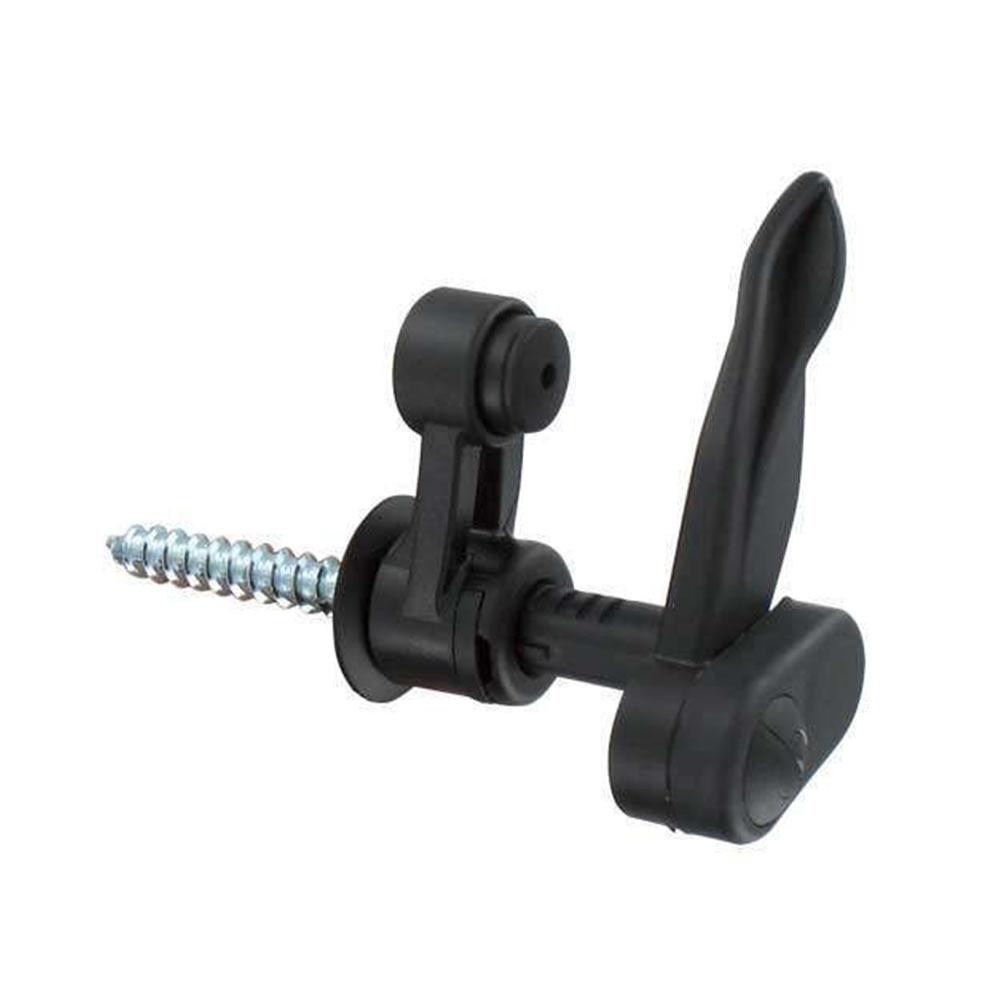
The TD-60 PVC rosette is a fixing accessory designed to be used in conjunction with a timber screw to secure insulation boards to a timber frame in external thermal insulation systems. With a diameter of 60 mm, it distributes the clamping force across the insulation.
Fitted with a fold-down cover to protect the screw head, it is supplied in packs of 100, making it convenient for quickly fitting a timber-framed façade.
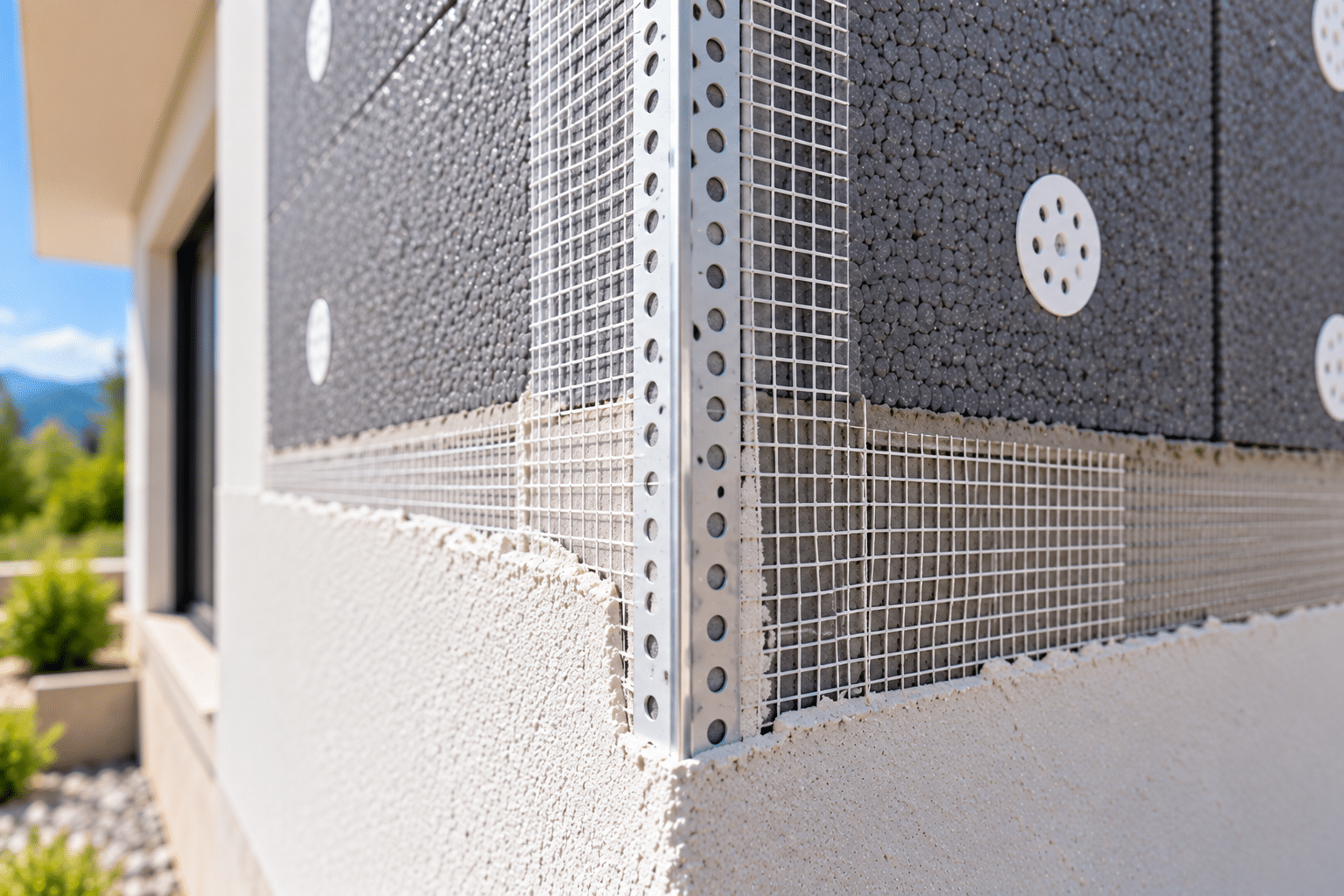
External wall insulation (EWI) anchors complement the bonding of the insulation. They absorb wind-induced pull-out forces and hold the system in place should the bonding fail. To ensure they hold securely, they must be suited to three factors: the substrate, the insulation and its thickness. The Centrale External Wall Insulation range:
The length of an external thermal insulation (ITE) anchor is calculated as follows: thickness of the insulation + thickness of the adhesive and the existing render + anchorage depth. For the LFM-10, ETE-17/0450 specifies an anchorage depth of at least 70 mm, in a hole 10 mm in diameter and at least 75 mm deep. With approximately 10 mm of adhesive, this gives: 100 mm 180 mm 120 mm 200 mm 140 mm 220 mm 180 mm 260 mm The number of wall plugs. Allow for at least 5 wall plugs per 1200 × 600 mm panel, i.e. approximately 7 per m², positioned at least 15 cm from the edges. In areas exposed to wind and at the edge of the façade, the fixing plan set out in the Technical Approval may require more. Installation: